November 2025 is set to be a landmark month for India’s automotive industry, as three major SUV launches gear up to dominate headlines and showrooms alike. From Hyundai’s tech-loaded compact crossover to Tata’s nostalgic comeback and Mahindra’s futuristic electric flagship, the Hyundai Venue 2025, Tata Sierra, and Mahindra XEV 9S are ready to shake up the SUV market in three distinct ways.
1. Hyundai Venue 2025: The Tech-Rich Compact SUV (Launch: November 4)
Hyundai Motor India is opening November with the much-awaited new-generation Venue. This upgrade represents one of the most significant facelifts since its debut, focusing on design innovation, comfort, and advanced technology.
Design and Interior Upgrades:
The 2025 Venue sports a bold new front grille, a fresh bumper design, and a sleek LED connected tail-light bar — giving it a premium edge inspired by Hyundai’s global SUV lineup. Inside, it offers a luxury-grade cabin with a dual 12.3-inch curved display, blending infotainment and driver information screens seamlessly. Ventilated front seats, a panoramic sunroof, and a premium 8-speaker Bose system add to the upmarket feel.
Safety and Powertrain:
The highlight is the inclusion of Level-2 ADAS (Advanced Driver Assistance Systems) — a first in this segment. Key functions include lane-keep assist, adaptive cruise control, and front collision avoidance. Under the hood, the Venue retains its proven 1.2-L petrol, 1.0-L turbo-petrol, and 1.5-L diesel engines. A new torque-converter automatic gearbox for the diesel variant ensures smoother and more efficient performance. Enthusiasts can also look forward to the N Line variant for a sportier driving experience.
2. Tata Sierra 2025: The Icon Returns (Launch: November 25)
The legendary Tata Sierra makes its grand comeback, rekindling nostalgia while embracing modern-day sophistication. The SUV’s design beautifully merges its iconic DNA with a futuristic appeal.
Exterior and Design Language:
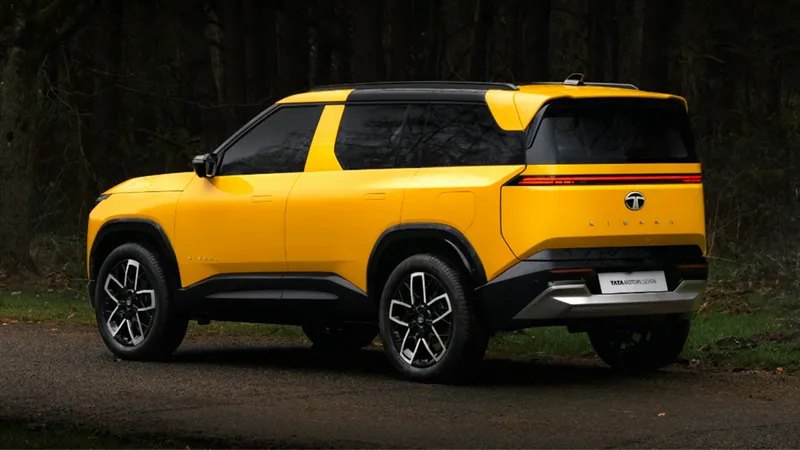
The Sierra’s upright, boxy stance instantly recalls the 1990s classic. Tata has reimagined its signature Alpine rear windows, now paired with a blacked-out roof for a floating effect. The front fascia features vertically stacked LED headlamps and a connected light bar, giving it a bold and futuristic character.
Luxury Cabin and Engine Options:
Inside, expect Tata’s new-age digital dashboard with triple-screen integration — infotainment, driver display, and a co-passenger screen. Features like panoramic sunroof, ventilated seats, and Level-2 ADAS are expected as standard. Powering the Sierra will be Tata’s refined 1.5-L turbo-petrol and 2.0-L diesel engines, while an all-electric variant will follow soon after launch. The Sierra aims to bridge the gap between the Nexon and Harrier, creating a new premium mid-SUV niche.
3. Mahindra XEV 9S: The 7-Seater Electric SUV (Launch: November 27)
Mahindra closes the month with a bang — the XEV 9S, an all-electric, seven-seater SUV built on Mahindra’s advanced INGLO (INdia GLobal) platform. Unlike conventional EV conversions, this one is born-electric, designed from the ground up for electric mobility.
Born-Electric Advantage:
The dedicated EV platform allows for a flat floor, extended wheelbase, and improved third-row comfort. The XEV 9S effectively serves as the electric counterpart of the XUV700, combining space with zero-emission performance.
Technology and Range:
Expect a high-tech interior with Mahindra’s signature tri-screen digital dashboard (cluster, infotainment, and passenger screen). The SUV is rumored to deliver a 500+ km range and support ultra-fast charging, appealing to families looking for long-distance EV convenience. This launch marks a defining moment in Mahindra’s EV journey, setting new standards for Indian electric SUVs.
Final Thoughts
November 2025 is shaping up to be one of the most dynamic months in the Indian auto market. Whether you’re drawn to Hyundai’s tech-driven Venue, Tata’s nostalgic yet modern Sierra, or Mahindra’s futuristic XEV 9S, there’s something for everyone. Together, these SUVs represent the past, present, and future of Indian mobility — innovation, emotion, and electrification all under one roof.