New Delhi, September 29, 2025:
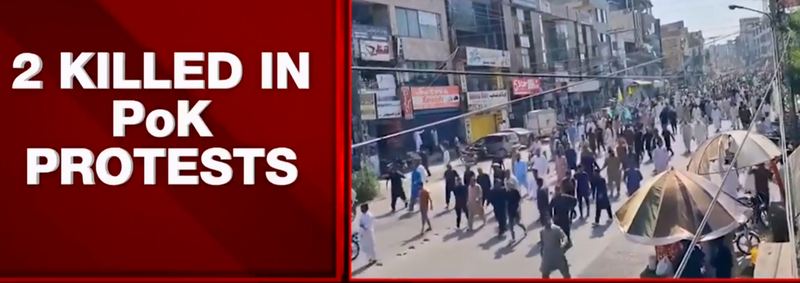
Two people were killed and at least 22 others injured on Monday after violent clashes broke out during massive protests in Muzaffarabad, the capital of Pakistan-occupied Kashmir (PoK). The demonstrations, led by the Awami Action Committee (AAC), saw thousands take to the streets demanding basic rights and an end to decades of political and economic neglect.
Violence on the Streets of Muzaffarabad
The situation spiraled out of control when armed groups, reportedly backed by the Pakistan Army and the ISI-supported Muslim Conference, opened fire on protesters. Videos aired on Pakistani news channels captured the chaos — gunshots, panicked crowds, and vehicles surrounded by agitated demonstrators waving flags and shouting slogans.
In one widely shared clip, men could be seen firing rifles into the air as protesters scattered. Another video showed a young man holding a handful of spent bullet shells, underlining the intensity of the violence.
A Shutdown Across PoK
The unrest is part of a 24-hour-long protest wave across PoK. Markets, shops, and transport services were completely shut down as thousands joined the demonstrations.
The protests are fueled by anger over what locals describe as the denial of fundamental rights for over 70 years. The AAC has put forward 38 demands, including the abolition of 12 assembly seats in PoK reserved for Kashmiri refugees living in Pakistan. Locals argue that these seats dilute representative governance and weaken their voice.
AAC’s Strong Warning to Islamabad
AAC leader Shaukat Nawaz Mir addressed the media during the protests. He accused Islamabad of ignoring the voices of PoK residents for decades.
“Our campaign is for fundamental rights denied to our people for over 70 years,” Mir said. “Either deliver on rights or face the wrath of the people.”
He called Monday’s strike “Plan A”, warning that if the government continues to remain silent, more aggressive steps — including a severe “Plan D” — will follow.
Government’s Response: Troops Deployed
Reports from Pakistani news outlet Dawn confirmed that Islamabad responded with a massive show of force. Thousands of heavily armed troops were re-routed from Punjab to PoK. Military patrols conducted flag marches in multiple towns to curb unrest and discourage further protests.
However, the deployment of troops has only fueled more anger among locals, who see it as an attempt to suppress rather than address their grievances.
Why PoK is Protesting Now
The protests highlight the growing frustration among the people of PoK. Locals complain of:
- Lack of electricity and rising tariffs.
- Shortage of essential commodities, including food items.
- Corruption and political mismanagement by leaders backed by Islamabad.
- A political system they believe is controlled by Pakistan’s army and not by elected representatives.
Observers say this wave of protests is one of the biggest civilian uprisings in PoK in recent years. It comes at a time when Pakistan itself is battling political instability and a severe economic crisis.
Regional and International Implications
The violence in Muzaffarabad has once again drawn international attention to the political status of Pakistan-occupied Kashmir. While Islamabad maintains tight control, these protests reveal deep discontent among the population.
Analysts warn that if the unrest continues, it could escalate into a larger crisis that Pakistan will struggle to contain. Calls for greater autonomy — and even independence — are expected to grow louder if the demands remain unmet.
Final Word
Monday’s violence in PoK is not an isolated event. It is the result of decades of frustration over the denial of basic rights, economic neglect, and political manipulation. With two lives already lost and dozens injured, the stakes have been raised.
Whether Islamabad responds with dialogue or more force will determine if the situation calms down — or spirals into a larger movement with long-term consequences.