Texas Hanuman Statue Sparks Political and Religious Controversy
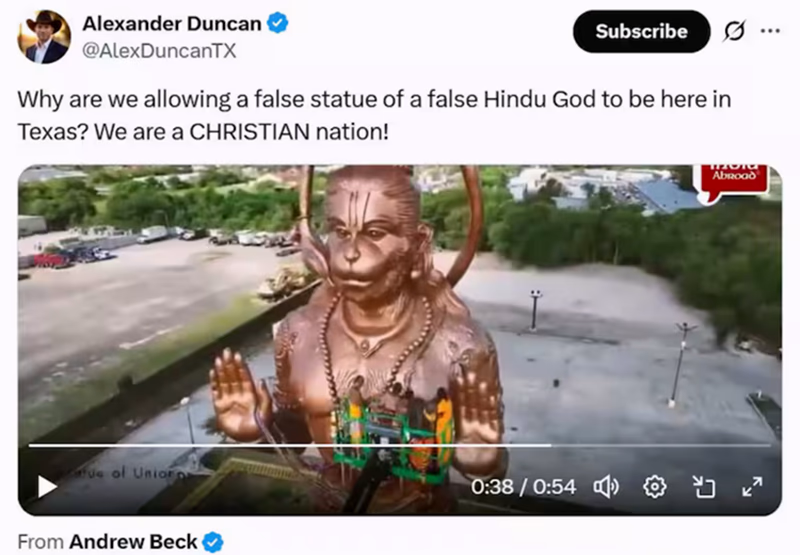
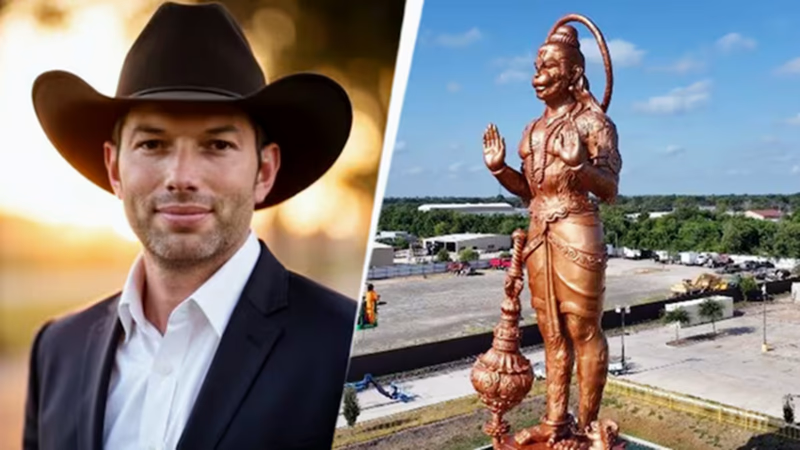
A leader from Donald Trump’s Republican Party has ignited a storm after questioning the installation of a 90-foot statue of Lord Hanuman in Texas, calling it a “false Hindu god.” The statue, known as the Statue of Union, was inaugurated at the Sri Ashtalakshmi Temple in August 2024, and has since become a symbol of pride for the Indian-American community.
Republican Senate candidate Alexander Duncan escalated tensions with a post on X (formerly Twitter), stating:
“Why are we allowing a false statue of a false Hindu God to be here in Texas? We are a Christian nation!”
Duncan further quoted biblical verses warning against idol worship, intensifying the backlash.
Fierce Response from Indian-Americans and Hindu Groups
The remarks were condemned by the Hindu American Foundation (HAF), which urged the Texas GOP to take disciplinary action against Duncan.
In a sharp statement, HAF said:
“Will you be disciplining your Senate candidate from your party who openly contravenes your own guidelines against discrimination – displaying anti-Hindu hate and disrespect for the First Amendment’s Establishment Clause?”
The Establishment Clause prohibits the US government from favoring or establishing any religion.
Community leaders warned that such comments could further alienate Indian-American voters, a demographic already angered by previous controversial remarks from Trump aides, including Peter Navarro’s caste-based comments.
MAGA Supporters Rally Against the Statue
This is not the first time the Texas Hanuman statue has faced criticism. Since its unveiling in 2024, the monument has been a target of online trolling and derogatory remarks from some MAGA supporters.
Several conservative voices on social media branded the statue as “demonic,” while others mocked its appearance. One headline from Newsweek described it as a “Huge half-monkey, half-human statue in Texas,” a portrayal Hindu groups strongly objected to.
Some users even made racially charged comparisons, drawing parallels between the statue and George Floyd, whose death in 2021 had sparked nationwide protests in the US.
Broader Implications
The controversy highlights ongoing religious intolerance and anti-India rhetoric in certain US political circles, coinciding with rising trade tensions between Washington and New Delhi.
For many Indian-Americans, the statue is more than a religious symbol — it represents cultural identity, inclusivity, and religious freedom in the United States.
As the debate grows, community leaders stress the importance of upholding constitutional values and ensuring respect for all faiths.