Split Reactions to Charlie Kirk’s Death
The death of Charlie Kirk, a 31-year-old conservative activist, has sparked a sharp divide across America. While tens of thousands of supporters, including prominent Republican leaders, gathered in Arizona to celebrate him as a martyr and principled conservative hero, many Black pastors across the country delivered a different message from their pulpits.
For them, Kirk’s memorialization as a religious figure stands in stark contrast to the controversial rhetoric he promoted during his lifetime, which often targeted Black Americans, immigrants, women, Muslims, and LGBTQ+ communities.
“How You Die Does Not Redeem How You Lived”
Rev. Howard-John Wesley, of Virginia, drew attention online with a widely shared sermon:
“How you die does not redeem how you lived.”
Pastors like Wesley argue that labeling Kirk as a Christian martyr ignores the harm caused by his divisive rhetoric, which they believe runs contrary to the teachings of Jesus Christ.
Similarly, Rev. Jacqui Lewis, of Middle Collegiate Church in New York City, called out what she described as “white nationalism wrapped in talk of Jesus.” She added:
“It’s not Christianity. It’s just not.”
Christianity, Politics, and Race
The contrasting reactions highlight a deep racial and religious divide in the U.S. While conservative white Christians, particularly evangelicals, framed Kirk as a man of faith and conviction, many Black pastors drew parallels between his rhetoric and historical uses of religion to justify exclusion and oppression.
Rev. Joel Bowman of Louisville, Kentucky, noted that Kirk’s memorial felt “part service, part political rally,” underscoring what he described as the growing conflation of Christian faith and right-wing politics.
A Moment of Reckoning
The debate over Kirk’s legacy is not just about one man—it reflects broader tensions around Christian nationalism, race, and political violence in America.
For Black clergy, the moment is an opportunity to reaffirm their long tradition of speaking truth to power and defending communities against rhetoric they see as harmful. For conservatives, Kirk’s memorialization represents the strength of their movement and the enduring appeal of his message.
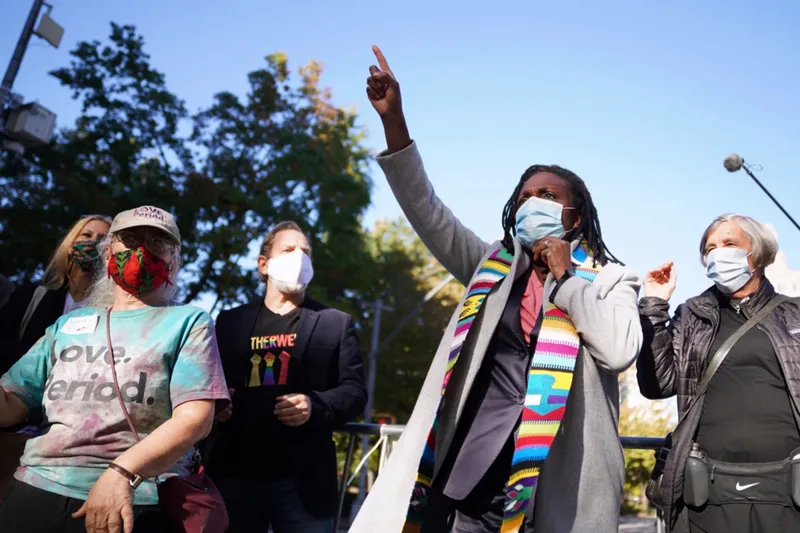
Black pastors say Charlie Kirk is not a martyr