New Delhi, December 3, 2025:
A viral video has captured a remarkable and historic moment — the screening of the acclaimed Indian animated film Mahavatar Narsimha inside the Swaminarayan Mandir in Karachi, Pakistan. The event, which drew a large audience of devotees and local Hindu community members, has sparked widespread appreciation across social media for promoting cross-border cultural harmony and religious coexistence.
Historic Temple Screening in Karachi
The circulating footage, reportedly filmed by an attendee, shows the animated mythological epic being projected on a large screen inside the temple hall. A packed audience can be seen watching the film with deep reverence, many standing in devotion as key sequences unfold on-screen.
Text embedded in the video described the occasion as the “first-ever screening of Mahavatar Narsimha in Pakistan”, emphasizing its unprecedented nature.
Attendees described the atmosphere as “charged with energy, emotion, and spiritual pride.” For Karachi’s Hindu community, which forms a small yet vibrant minority in Pakistan, the screening symbolized a celebration of faith and identity in a culturally shared setting.
A Viral Symbol of Cultural Unity
The video’s rapid spread across platforms such as X (formerly Twitter), Instagram, and Facebook has turned it into a symbol of cross-cultural peace. Viewers from both India and Pakistan lauded the screening as an inspiring example of how shared heritage can transcend political boundaries.
Comments on the post overflowed with positivity — words like “heartwarming,” “historic,” and “hopeful” were repeated thousands of times. Social media users praised the initiative for representing the enduring bond between communities connected by ancient cultural and spiritual traditions.
One user wrote, “Art and devotion have no borders. This is what South Asia truly stands for — shared roots, shared stories, shared souls.”
‘Mahavatar Narsimha’ and Its Global Reach
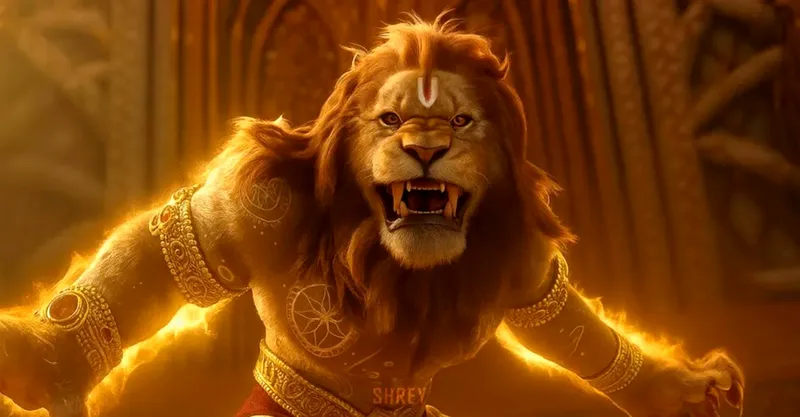
The film itself has played a key role in reviving interest in Hindu mythological storytelling through animation. Mahavatar Narsimha, celebrated as India’s first Oscar-eligible mythological animated feature, recounts the story of Lord Vishnu’s Narasimha avatar, who appears to protect his devotee Prahlad from evil.
Since its release, the film has been praised for its high-quality visuals, cinematic music score, and emotional depth. International audiences have described it as a milestone in Indian animation, successfully combining ancient mythology with modern storytelling techniques.
The spontaneous screening in Karachi is now being viewed as evidence of the film’s cross-border spiritual impact, underscoring the unifying power of art and faith.
Awaiting Official Confirmation but Celebrating the Spirit
While official confirmation from the Swaminarayan Mandir administration or Pakistani media outlets about the formal organization of the event is still pending, the viral footage has already gained a life of its own.
Cultural commentators in both countries note that such expressions of faith — particularly involving Indian art in Pakistan — remain rare but deeply significant. The shared appreciation for mythological storytelling continues to demonstrate how cinema can build bridges even where politics often erects walls.
As one cultural observer commented, “This wasn’t just a movie screening; it was a reminder that devotion, art, and storytelling belong to everyone — no matter which side of the border you’re on.”
A Shared Spiritual Legacy Rekindled
For millions of South Asians, the Mahavatar Narsimha screening stands as a beautiful reminder of common ancestry, faith, and values that persist despite divisions. The event underscores that spiritual expression and cultural pride can coexist peacefully — and even thrive — when mutual respect is embraced.
Whether formally organized or organically assembled, the moment has become a digital monument to unity, celebrated across India and Pakistan as a reaffirmation of hope through art.