
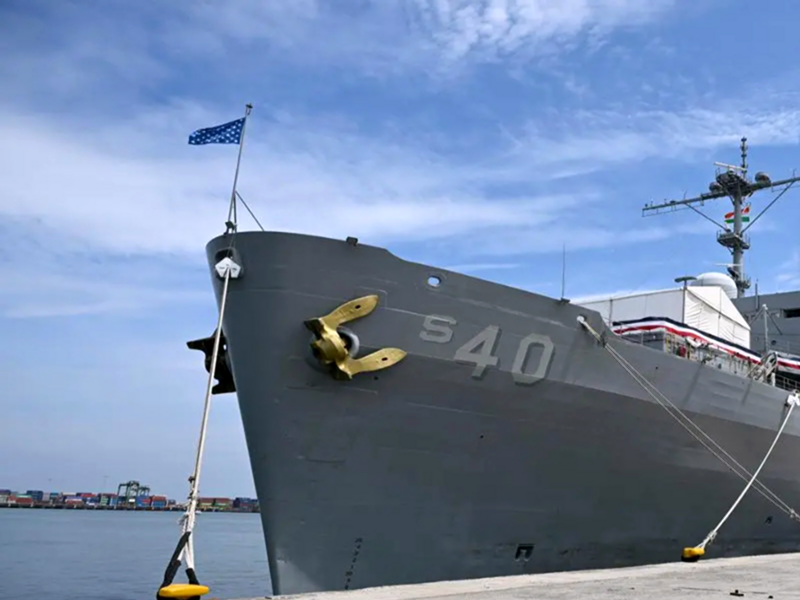
India is set to become a global maritime leader. The Union Cabinet has approved a transformative, decade-long package worth ₹69,725 crore (approximately $8.4 billion). This landmark funding aims to revitalize the nation’s shipbuilding and broader maritime sector. The ambitious initiative will drastically scale up India’s indigenous capacity. It will also foster technological advancements and create a globally competitive maritime infrastructure.
The package comes after a crucial Cabinet meeting. It is built upon a strategic four-pillar approach. This strategy focuses on financial assistance, long-term financing, cluster development, and vital policy reforms. This multi-pronged plan addresses historical challenges in the capital-intensive sector. It firmly aligns the industry with the national vision of Aatmanirbhar Bharat (self-reliant India).
Pillar 1: Financial Incentives and the ₹24,736 Crore SBFAS
The first pillar is dedicated to financial aid. It aims to bridge the cost difference between Indian and global shipyards.
A core component is the extension and enhancement of the Shipbuilding Financial Assistance Scheme (SBFAS). This scheme will run until March 31, 2036, with a total corpus of ₹24,736 crore. This scheme offers crucial incentives to domestic shipyards.
- Standard Incentives: Financial support will vary based on the vessel’s value. It offers 15% assistance for vessels valued below ₹100 crore. This increases to 20% for those valued above ₹100 crore.
- Specialized Ship Incentives: Assistance rises up to 25% for high-value, specialized vessels. This includes new-age ships like green and hybrid vessels. This encourages modern, environmentally friendly construction.
Introducing the Shipbreaking Credit Note
A significant allocation of ₹4,001 crore is made for a Shipbreaking Credit Note. This is an innovative financial tool, similar to a vehicle scrappage policy. Ship owners can get a credit note. This credit note is against the scrap value of an old vessel broken in an Indian yard. Owners can then offset this note against the cost of building a new vessel domestically. This promotes recycling within India and boosts domestic orders immediately.
Pillar 2: Long-Term Funding through the ₹25,000 Crore MDF
Shipbuilding is highly capital-intensive. Recognizing this need, the government approved a Maritime Development Fund (MDF) with a corpus of ₹25,000 crore. The MDF will provide long-term, affordable financing.
The fund has two main components:
- Maritime Investment Fund: This is a ₹20,000 crore fund. It will directly support equity investments in key maritime projects. The government will hold a 49% participation stake in this fund.
- Interest Incentivization Fund: This ₹5,000 crore fund is crucial for lowering debt costs. It offers an interest subsidy of up to 3% on loans for shipbuilding and related infrastructure projects. This improves project bankability and attracts private investors.
Pillar 3: Capacity and Infrastructure Development
The Shipbuilding Development Scheme (SbDS) drives the physical expansion of India’s maritime infrastructure. It has an outlay of ₹19,989 crore.
- Targeted Capacity: The primary goal is to expand domestic shipbuilding capacity. India aims for 4.5 million Gross Tonnage (GT) annually.
- Cluster Creation: Funds are allocated for creating integrated ecosystems. This includes developing both greenfield (new) and brownfield (expansion) shipbuilding clusters. These clusters will become globally competitive hubs.
- Technology and Skill Support: The scheme will fund the India Ship Technology Centre. This center, under the Indian Maritime University, will boost Research and Development (R&D) and design capabilities. The package also includes risk coverage and insurance support for shipbuilding projects. This protects builders from potential buyer defaults.
Pillar 4: Policy and Legal Reform
The fourth pillar focuses on creating a seamless operating environment. It mandates necessary legal, taxation, and process reforms. Several key maritime laws are being updated. These include the Merchant Shipping Act and the Indian Ports Act. The goal is to align Indian regulations with modern international standards. This will ensure efficiency and transparency for domestic and foreign investors.
Profound Economic and Strategic Impact
The government projects that this extensive reform package will have a profound impact. It will boost the Indian economy and solidify the country’s strategic standing on the world stage.
- Massive Investment and Job Creation: These initiatives are expected to generate approximately ₹4.5 lakh crore in investments. They will also create nearly 30 lakh (3 million) direct and indirect jobs across the entire value chain.
- A True Maritime Renaissance: The broader goal is ambitious. The package aims to catapult India from its current 16th rank in global shipbuilding into the Top 10 by 2030. The ultimate vision is to reach the Top Five by 2047. This marks a true maritime renaissance for the nation.
- Strategic Self-Reliance: By significantly strengthening indigenous shipbuilding, the package enhances national, energy, and food security. It fortifies critical supply chains and maritime routes. This massive push towards strategic self-reliance will reduce India’s current heavy dependence on foreign carriers for its trade. Over 95% of India’s trade by volume relies on the sea.
To effectively oversee and coordinate all these initiatives, the government will establish a National Shipbuilding Mission. This comprehensive package signals a deep commitment. It aims to unlock the vast potential of the maritime sector, positioning it as a pivotal engine for India’s economic growth and geopolitical influence for decades to come.